CRM

A field service CRM built around sites and equipment

Customers, the sites they run, and every unit on those sites — with the full service history attached to each one.

Founder-led · Running in production since 2019 · Built in Austin, TX

Customers, sites, and every unit on them

The record a tech needs before they walk in the door.

Built around equipment, not contacts

A general-purpose CRM tracks people. Yours has to track the rooftop unit, the walk-in, and the rack — because that's what you get called about.

Multi-site accounts

One customer, twelve stores, different equipment at each. A tech dispatched to a site they've never seen still knows what's in it.

Full service history per unit

Make, model, serial, refrigerant type, and everything that's ever been done to it — including who did it and what they found.

Context before the truck rolls

The tech opens the job and sees the last three visits on that unit. No calling the office, no guessing at what was replaced last spring.

One record, office and field

The same customer, site, and equipment record on the dispatcher's screen and the technician's phone — not a spreadsheet the office keeps separately.

Works with no signal

The whole customer and equipment record is on the device, so it's readable in a basement mechanical room with no bars.

The history, where the work happens

Every job on a site, tied back to the equipment it was done on.
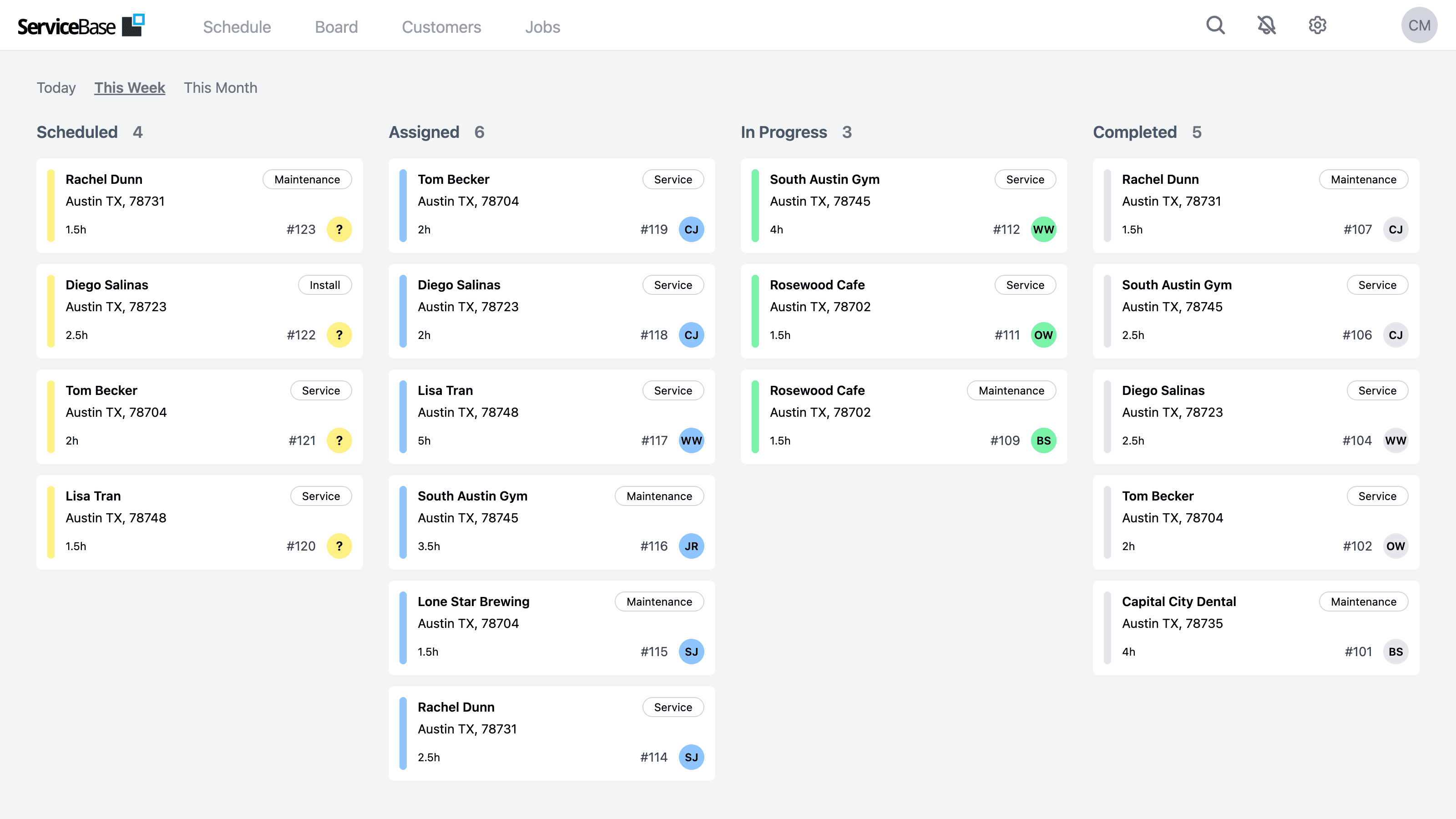
FIG 4.0 — Customers, Sites & Equipment
ServiceBase showing commercial customers, their sites, and the service history on each unit

Common questions

What is a field service CRM?
It's the customer record built for service work: not just contacts and deals, but the sites a customer runs, the equipment at each site, and the full service history attached to every unit.
How is this different from a regular CRM?
A general-purpose CRM organizes around people and opportunities. Field service organizes around equipment — you get called about a specific rooftop unit at a specific address, and the record has to start there.
Does it handle customers with multiple locations?
Yes. Multi-site accounts are the normal case in commercial work — one customer with a dozen stores, each with different equipment. Sites and their units are organized under the account.
Can technicians see the history in the field?
Yes, and offline. The customer, site, and equipment history are on the device, so a tech arriving at an unfamiliar property already knows what's there and what was done last.
How much does it cost?
$15,000 a year, flat, with unlimited users and no per-technician fees. Implementation starts at $2,500. The price is published — you don't need a sales call to find out.

See it run jobs like yours

A 20-minute walkthrough straight from someone who builds it — no script, no obligation.

Free · 20 minutes or less · No commitment